Steel plates, pots and cutlery are kitchen workhorses, but they dull over time with grease, water spots and burnt food. Knowing how to clean steel utensils restores their shine and keeps them hygienic. Most fixes use ingredients you already own. Here is how to clean steel utensils so they look as good as new.
Everyday washing for steel utensils
Wash steel items soon after use, before food dries on. Warm water and dish soap handle most meals, applied with a soft sponge. Rinse well and dry with a cloth straight away, since air-drying leaves cloudy spots. This habit alone keeps utensils bright.
How to clean steel utensils with burnt food
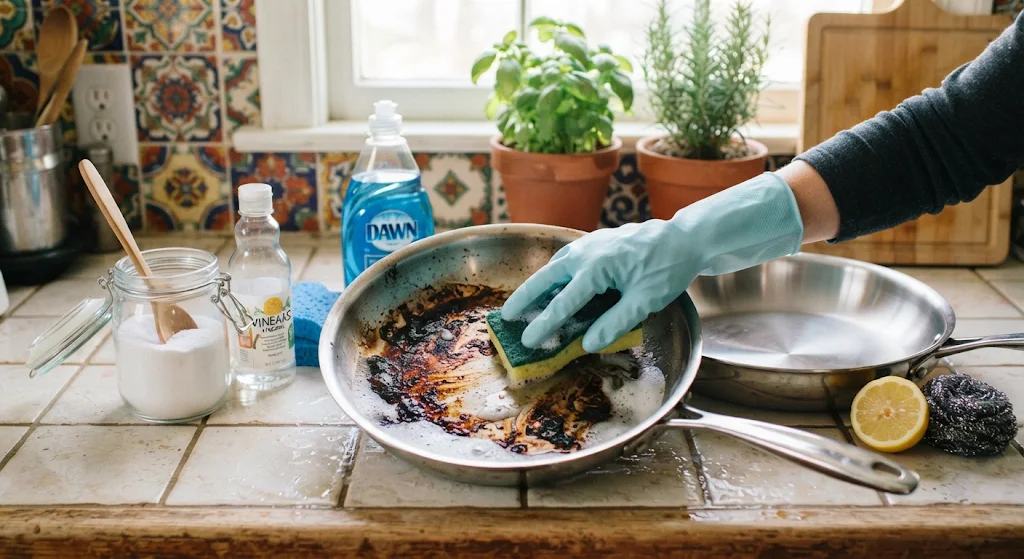
Scorched pots need soaking, not scrubbing. Fill the pan with hot water, add a tablespoon of baking soda and simmer for ten minutes. The burnt layer loosens and lifts with a wooden spoon. For really stubborn spots, make a baking-soda paste and leave it on for an hour before scrubbing gently.
Removing stains, spots and dullness
Hard-water marks and discolouration respond well to white vinegar. Wipe it on with a cloth, leave it briefly, then rinse and dry. A cut lemon dipped in salt also polishes tarnished steel and leaves a fresh smell. Avoid steel wool, which scratches the surface and invites rust.
Quick steel-care checklist
- Wash promptly with warm, soapy water.
- Soak burnt pans in baking soda and hot water.
- Use vinegar or lemon for spots and tarnish.
- Dry immediately to prevent cloudy marks.
Caring for other kitchen metals
Different metals need different care. For appliances and larger surfaces, see how to clean stainless steel, and for traditional metalware, our guide on how to clean bronze utensils covers gentle, natural methods. For broader cleaning advice, the Good Housekeeping Institute is a trusted source.
With baking soda, vinegar and quick drying, your steel utensils stay spotless and ready for the next meal. Find more kitchen care tips on the JustHub blog.