
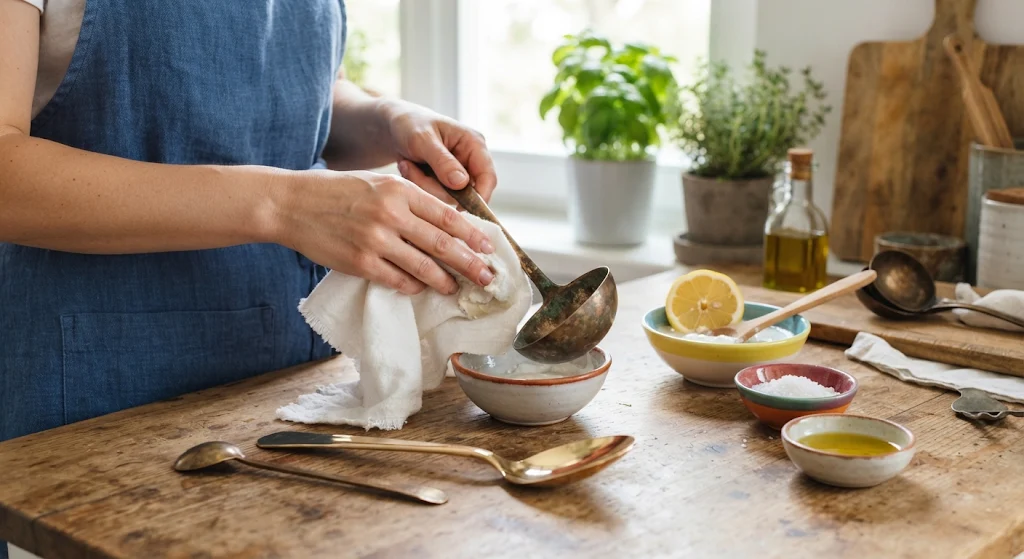
Bronze and bell-metal utensils add warmth and tradition to any kitchen, but they tarnish and darken with use. Learning how to clean bronze utensils brings back their rich, golden glow using simple natural ingredients. Harsh chemicals are rarely needed. Here is how to clean bronze utensils gently and effectively.
Why bronze tarnishes
Bronze is an alloy of copper and tin, and copper reacts with air, moisture and acids. That reaction forms a dull or greenish layer over time. The tarnish is harmless but unattractive, and regular cleaning keeps it at bay. Gentle acids lift it without scratching.
How to clean bronze utensils with lemon and salt
Lemon and salt make a classic, effective polish. Sprinkle salt over the utensil, then rub it with half a lemon. The mild acid and gentle abrasion loosen tarnish quickly. Rinse with warm water and buff dry with a soft cloth to reveal the shine.
Other natural methods
Tamarind pulp works just as well and is a kitchen staple in many homes. Mix it with a little water, apply it to the metal, then scrub softly and rinse. A paste of vinegar, flour and salt also tackles heavier tarnish. Always dry bronze thoroughly, since trapped moisture causes fresh spots.
Quick bronze-care tips
- Clean soon after cooking acidic foods.
- Use lemon, tamarind or vinegar, not harsh chemicals.
- Rub gently with a soft cloth, never steel wool.
- Dry completely and store in a dry place.
Caring for metal kitchenware
Each metal has its own needs. For everyday stainless items, see how to clean steel utensils, and if you are unsure which metal you own, our guide on how to identify copper metal helps you tell them apart. For conservation-grade advice, the Smithsonian Institution shares metal care guidance.
With lemon, salt or tamarind, bronze utensils regain their beautiful warm shine and last for generations. Find more cleaning guides on the JustHub blog.