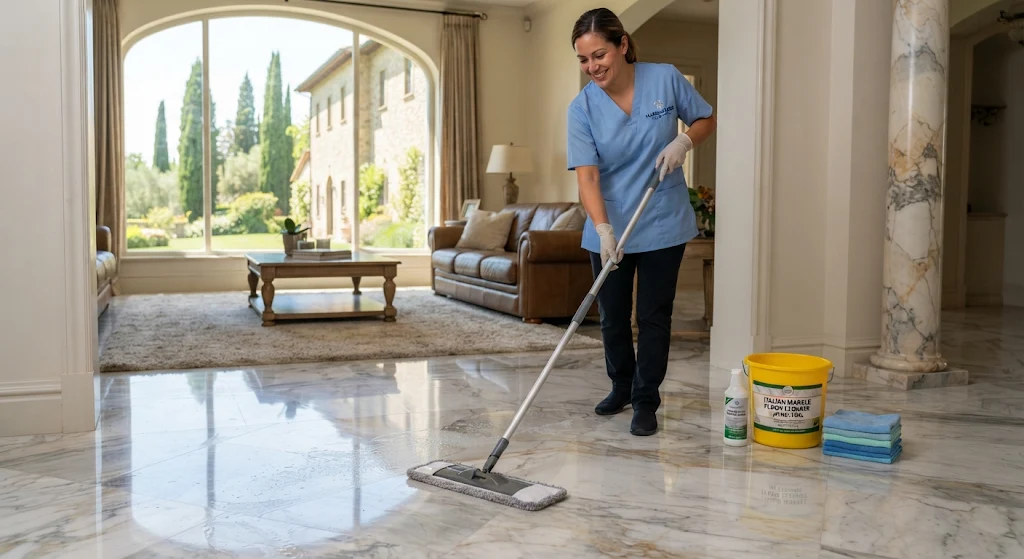
An Italian marble floor is a stunning feature, but it is softer and more delicate than it looks. Knowing how to clean Italian marble floor surfaces protects that mirror-like finish from dullness and damage. The golden rule is simple: avoid anything acidic. Here is how to clean Italian marble floor areas safely and keep them gleaming.
Why marble needs special care
Marble is natural stone made largely of calcium carbonate. Acidic cleaners, vinegar and citrus react with it and leave dull, etched patches. Grit also scratches the polished surface underfoot. Gentle products and regular dusting prevent most problems.
How to clean Italian marble floor day to day
Start by dust-mopping or vacuuming to lift loose grit. Mix a few drops of pH-neutral stone cleaner, or mild dish soap, into warm water. Mop with a soft, well-wrung microfibre mop, since standing water can seep in. Rinse with clean water and dry with a soft cloth to avoid streaks.
Dealing with spills and stains
Blot spills immediately rather than wiping them across the stone. For an oily mark, use a poultice of baking soda and water left on overnight. Never reach for vinegar, lemon or bathroom descalers on marble. If the floor loses its shine, a professional can re-polish it.
Marble care checklist
- Dust and vacuum regularly to remove grit.
- Use only pH-neutral or stone-safe cleaners.
- Wring the mop well and dry the floor after.
- Seal the marble as the installer recommends.
Looking after stone surfaces
Marble shares care principles with other natural stone. Our guide on whether granite can stain explains sealing and spill care, while cleaning timber floors with metho covers hard-floor cleaning more broadly. For stone-specific standards, the Natural Stone Institute is the authority.
Treat it gently with pH-neutral cleaners and your Italian marble floor keeps its elegant, polished glow for years. Find more home care guides on the JustHub blog.