Copper is valuable, useful and often confused with brass and bronze. Learning how to identify copper metal helps whether you are sorting scrap, buying cookware or restoring an old piece. A few simple tests give you the answer at home. Here is how to identify copper metal with confidence.
Start with colour
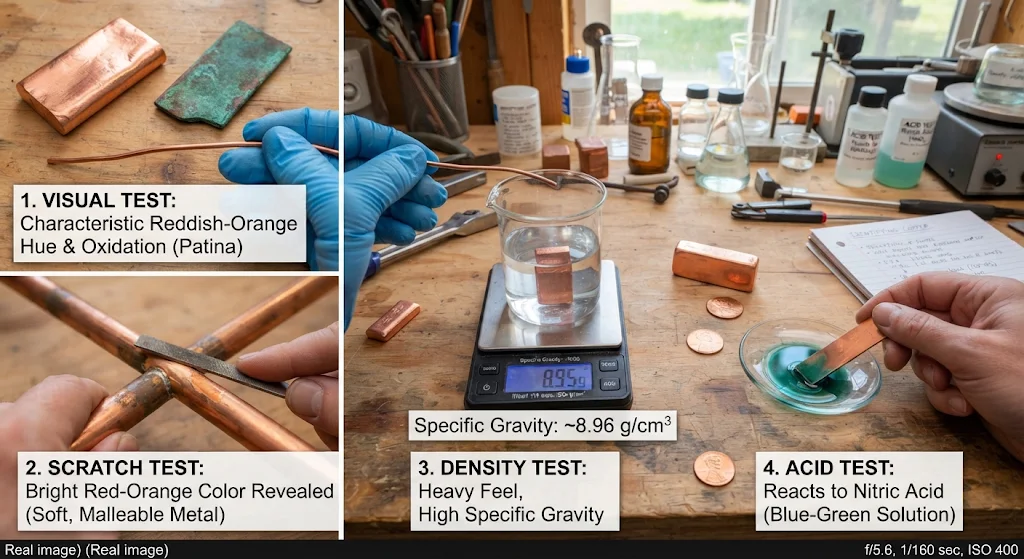
Pure copper has a distinctive reddish-orange or salmon tone. Brass looks more yellow or gold, while bronze sits in a darker brown-gold range. Good lighting matters, so check the metal in daylight. A freshly scratched spot shows the true colour beneath any coating.
How to identify copper metal with the magnet test
Copper is not magnetic, which rules out many look-alikes. Hold a strong magnet to the item, and if it clings firmly, the piece is steel or iron, perhaps only copper-plated. A magnet that slides off with no pull points towards real copper, brass or bronze. Combine this with the colour check for a clearer result.
Patina, weight and sound
Over time copper develops a green or brown patina, a natural sign of age and authenticity. The metal also feels dense and heavy for its size. Tap it gently and listen, since copper tends to give a soft, dull ring rather than a sharp clang. Together these clues separate copper from cheaper substitutes.
Quick identification checklist
- Reddish-orange colour on a fresh scratch.
- No pull from a magnet.
- Green or brown patina with age.
- Heavy, dense feel in the hand.
Telling metals apart
Copper, brass and bronze are closely related alloys that need different care. Our guides on how to clean bronze utensils and how to clean steel utensils show the right method for each. For technical detail on copper and its alloys, the Copper Development Association is the authority.
With colour, a magnet and a quick weight check, you can identify copper metal reliably in minutes. Find more practical guides on the JustHub blog.