Tiny but mighty, edible seeds are among the easiest ways to boost a meal’s nutrition. Knowing the different types of seeds to eat helps you choose the right one for fibre, protein or healthy fats. Each has its own flavour and best uses. Here is a guide to the different types of seeds to eat and why they are worth it.
Seeds rich in omega-3 and fibre
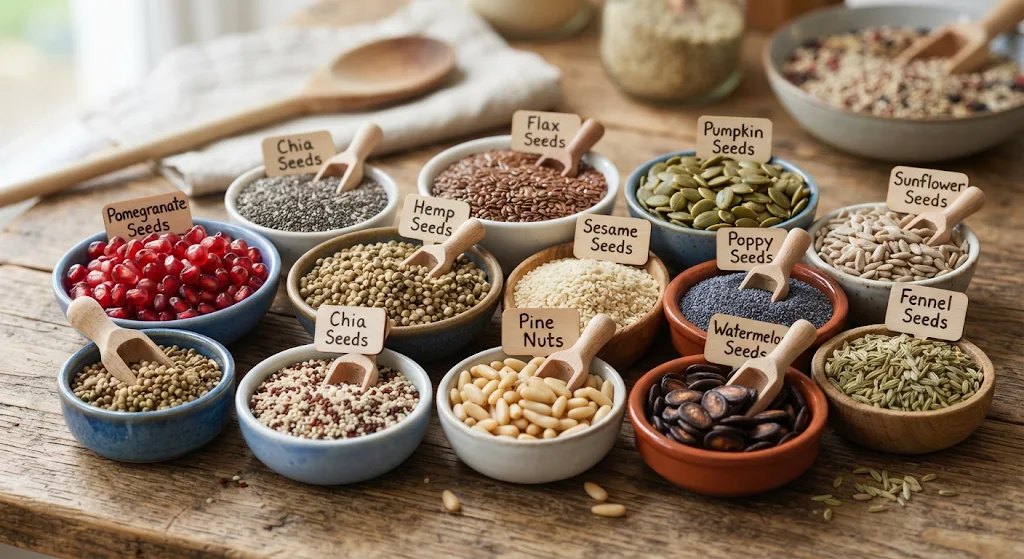
Chia seeds absorb liquid and form a gel, making them great in puddings and smoothies. They are rich in fibre and plant omega-3 fats. Flaxseeds offer similar benefits, though they are best ground so the body can absorb them. Both support digestion and heart health.
Seeds for protein and minerals
Pumpkin seeds are a tasty source of protein, magnesium and zinc. Sunflower seeds add vitamin E and a pleasant crunch to salads. Hemp seeds stand out as a complete plant protein, with all essential amino acids. A spoonful of any lifts an everyday dish.
Everyday kitchen seeds
Sesame seeds bring calcium and healthy fats, and they star in tahini and many cuisines. Toasting them deepens their nutty flavour. They sprinkle beautifully over stir-fries, breads and salads. Little touches like this make healthy eating effortless.
Easy ways to add seeds
- Stir chia or flax into porridge and smoothies.
- Sprinkle pumpkin or sunflower seeds on salads.
- Add hemp seeds to yoghurt for extra protein.
- Toast sesame seeds over stir-fries and breads.
Seeds as part of a bigger picture
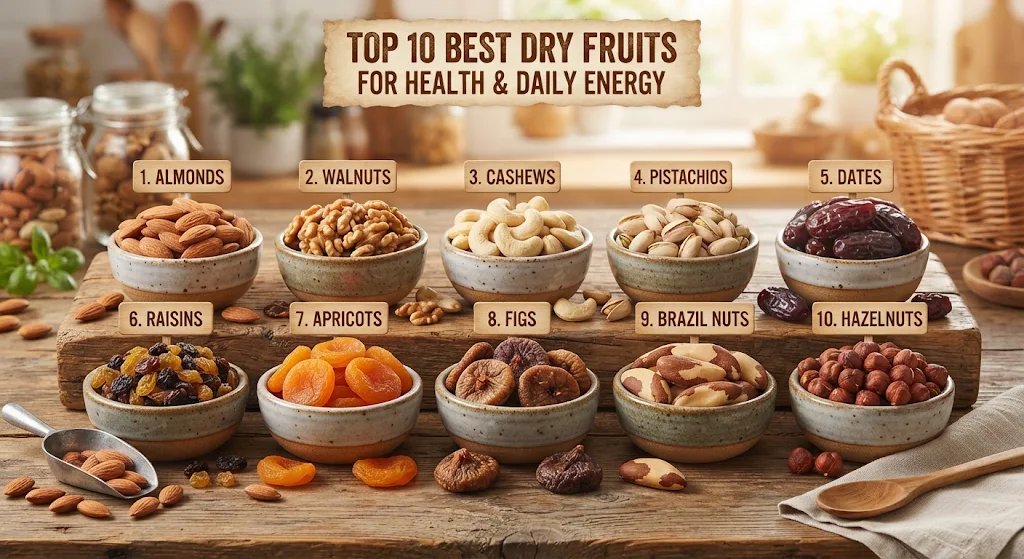
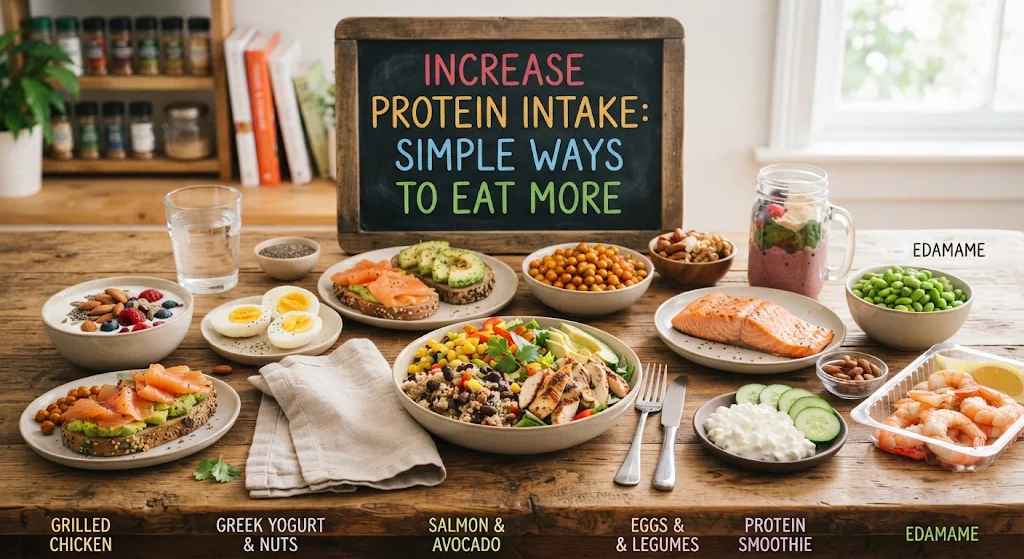
Seeds are a painless way to eat better every day. They help you increase your protein intake, and they pair naturally with the top 10 best dry fruits for health in a homemade trail mix. For guidance on seeds and nutrition, the Academy of Nutrition and Dietetics is a trusted source.
A few spoonfuls of mixed seeds each day quietly upgrade your meals with fibre, protein and healthy fats. Find more nutrition tips on the JustHub blog.