Noticing thinning at the top of your head can be unsettling. Crown area hair loss is one of the most common patterns, affecting both men and women. The good news is that early action often helps. This guide covers what causes crown area hair loss, the warning signs and the options that can help.
What causes crown area hair loss
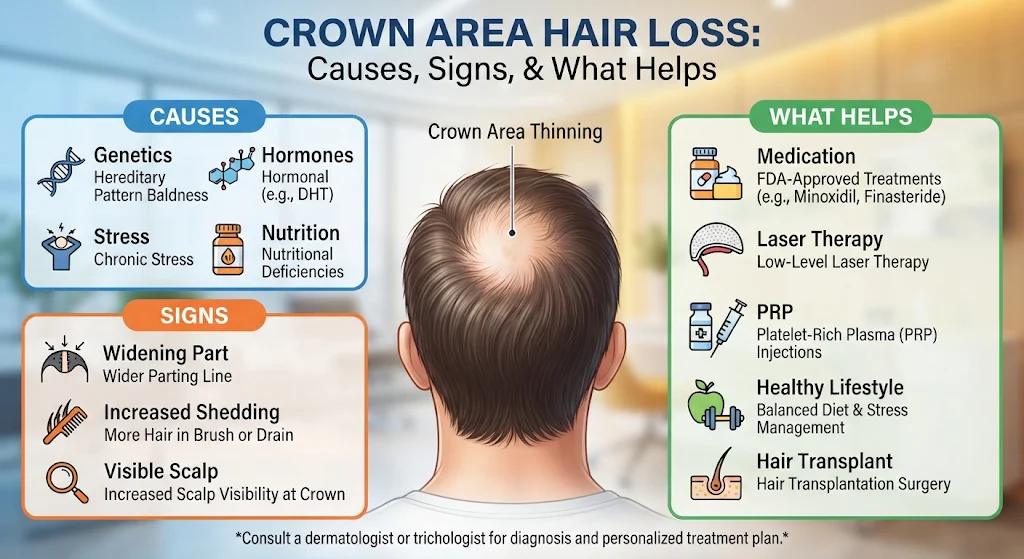
Genetics are the leading cause, through a condition called pattern hair loss. A hormone called DHT gradually shrinks follicles at the crown, so hairs grow finer and shorter. Stress, illness, rapid weight loss and poor nutrition can speed up shedding. Some medical conditions and medications play a role too.
Early signs to watch for
Crown thinning often starts quietly, so it is easy to miss. You might see more scalp through the hair in photos or bright light. A widening swirl at the crown is another common clue. Catching these signs early gives treatments the best chance to work.
What can help
Several approaches can slow or improve crown thinning. Over-the-counter minoxidil is widely used and backed by evidence. A balanced diet rich in protein, iron and vitamins supports healthy growth from within. Gentle scalp care and reduced stress also help. For persistent loss, see a dermatologist, who can confirm the cause and discuss prescription options.
Supportive daily habits
- Eat enough protein and iron-rich foods.
- Manage stress with sleep and exercise.
- Avoid tight styles that pull the crown.
- Treat the scalp gently, without harsh products.
Caring for your hair and scalp
Good nutrition and a healthy scalp underpin every treatment. Our guide on rosemary uses for hair explores one popular natural option, and eating well, as in how to increase protein intake, supports stronger strands. For medical guidance on hair loss, the American Academy of Dermatology is a reliable source.
Crown thinning is common and often treatable, especially when you act early and seek advice when needed. Find more wellness guides on the JustHub blog.