Honey is one of the few foods that almost never spoils when stored well. Knowing how to store honey keeps it smooth, pourable and fresh for years. The main enemies are moisture and heat, not time. This guide explains how to store honey and what to do when it crystallises.
Why honey lasts so long
Honey is naturally low in water and high in sugar, which stops most microbes growing. Its slight acidity helps too. That is why sealed honey can last almost indefinitely. Proper storage simply protects its texture and flavour.
How to store honey correctly
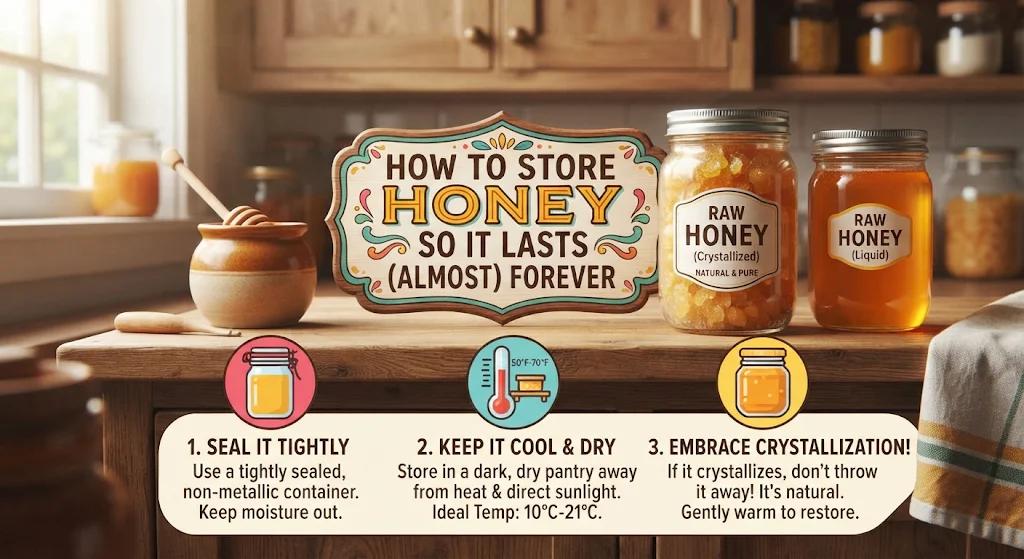
Keep honey in an airtight jar at room temperature, ideally in a cupboard. Choose a spot away from the oven, hob and direct sunlight, since heat degrades flavour. Always use a clean, dry spoon, because introduced water can cause fermentation. Wipe the rim and seal the lid firmly after each use.
Should you refrigerate honey?
Refrigeration is unnecessary and actually speeds up crystallisation. Cold temperatures encourage sugars to form grainy crystals faster. A cool pantry shelf is far better than the fridge. Freezing is only useful for very long-term storage.
Fixing crystallised honey
- Crystallisation is natural and does not mean honey is spoiled.
- Stand the jar in warm water to gently re-liquefy it.
- Avoid boiling or microwaving, which harms flavour.
- Keep the jar sealed and dry between uses.
More honey know-how
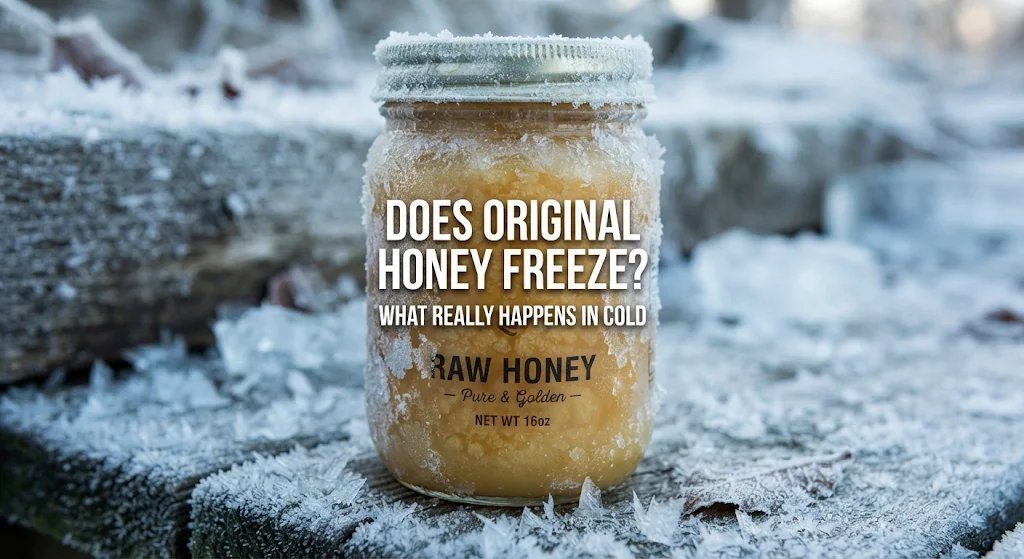
Honey behaves in some surprising ways. Our guide on whether original honey freezes clears up a common myth, and how long balsamic vinegar lasts covers another pantry staple. For honey facts and handling, the National Honey Board is a trusted source.
Store honey sealed, cool and dry, and it will reward you with years of smooth, golden sweetness. Find more kitchen tips on the JustHub blog.