Sourdough has a well-earned reputation for staying fresh longer than ordinary bread. The shelf life of sourdough bread is extended by its natural acidity, which slows staling and mould. Even so, storage makes a big difference. This guide covers the real shelf life of sourdough bread and how to keep it at its best.
Why sourdough keeps longer
The wild fermentation behind sourdough produces lactic and acetic acids. These acids create an environment that mould and bacteria dislike. That is why a good crusty loaf resists going off for several days. The thick crust also helps lock in moisture.
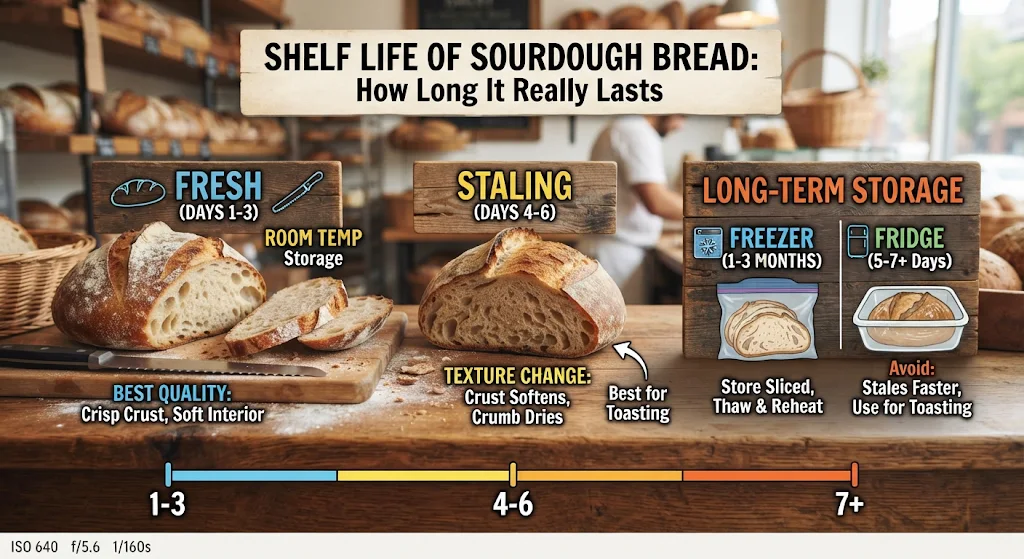
The real shelf life of sourdough bread
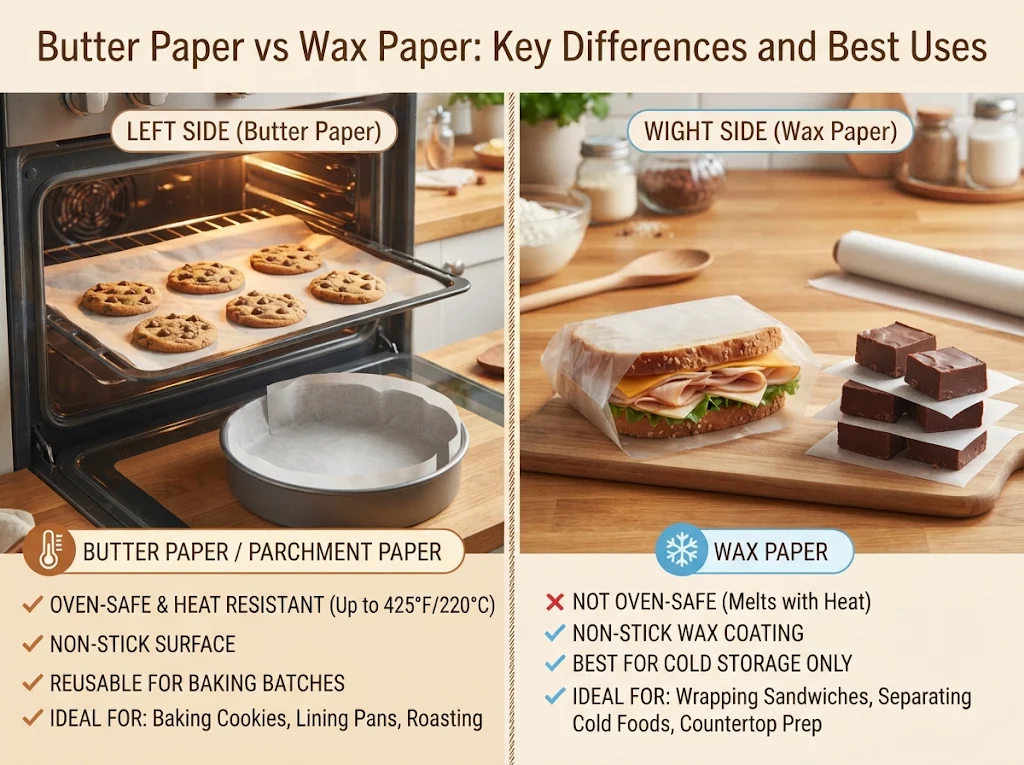
Stored well at room temperature, a sourdough loaf stays good for three to five days. Keep it cut-side down on a board, or in a paper bag or bread box. Avoid the fridge, which actually dries bread out and speeds staling. Plastic traps moisture and can soften the crust or invite mould.
Freezing for longer storage
Freezing is the best way to keep sourdough beyond a few days. Slice the loaf first, then wrap it well and freeze for up to three months. Toast slices straight from frozen, or thaw a whole loaf at room temperature. This keeps waste down without losing much quality.
Storage at a glance
- Room temperature in paper or a bread box for 3–5 days.
- Cut-side down to protect the crumb.
- Freeze sliced for up to three months.
- Discard any loaf showing fuzzy mould.
More on keeping food fresh
Knowing how long staples last saves money and waste. See how long balsamic vinegar lasts after opening and whether coffee beans expire for more pantry guidance. For sourdough baking and storage, King Arthur Baking is a trusted source.
Thanks to its natural acidity, sourdough rewards simple storage with days of fresh flavour, and freezing stretches it further. Find more kitchen tips on the JustHub blog.