Reach for the wrong one and you could end up with melted wax on your dinner. The butter paper vs wax paper question trips up many home cooks, because they look similar but behave differently. The big divide is heat. This guide explains butter paper vs wax paper and when to use each.
What butter paper is
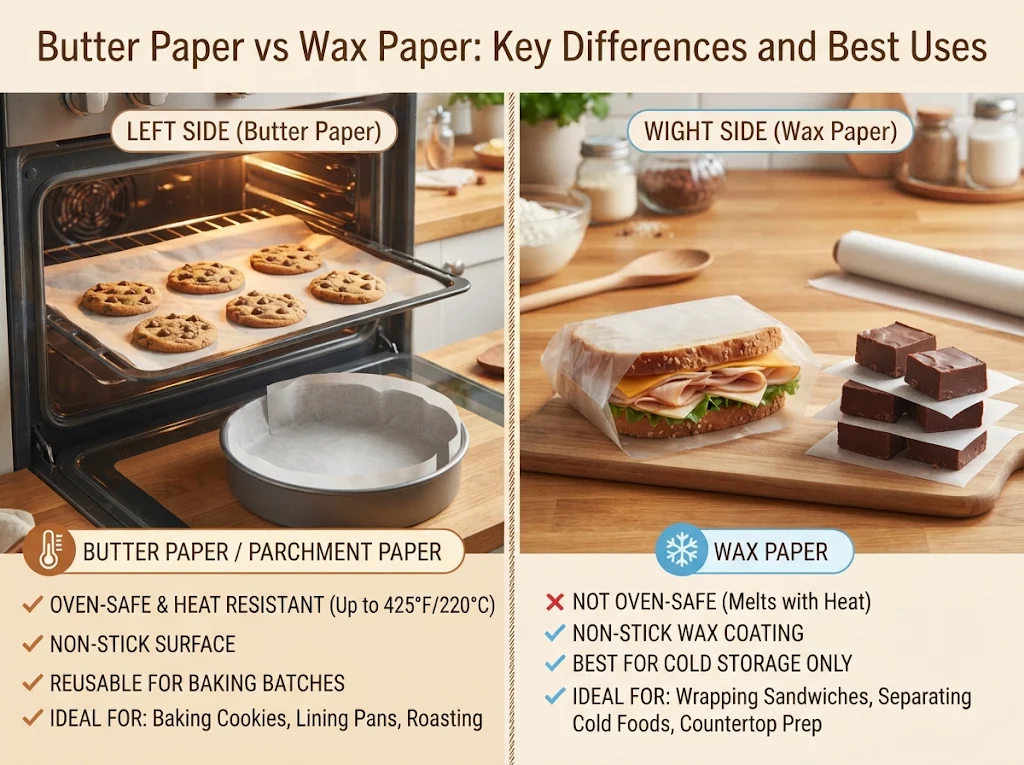
Butter paper, also called greaseproof or parchment paper, is treated to resist grease and heat. Good-quality butter paper is oven-safe to fairly high temperatures. That makes it the go-to for lining cake tins and baking trays. It also peels away cleanly from baked goods.
What wax paper is
Wax paper is coated with a thin layer of wax, usually paraffin or soy. That coating makes it moisture-resistant but not heat-resistant. In a hot oven the wax melts and can smoke or even catch. Wax paper is strictly for cold and room-temperature jobs.
Butter paper vs wax paper: the key difference
Heat tolerance is the deciding factor between the two. Use butter paper whenever the oven is involved, from biscuits to roasted vegetables. Use wax paper for wrapping sandwiches, separating burger patties or covering no-bake treats. Mixing them up is the most common kitchen mistake here.
Quick reference
- Baking and roasting: butter paper only.
- Wrapping and cold storage: wax paper is fine.
- Never put wax paper in a hot oven.
- Both help with easy, mess-free cleanup.
More kitchen-paper know-how
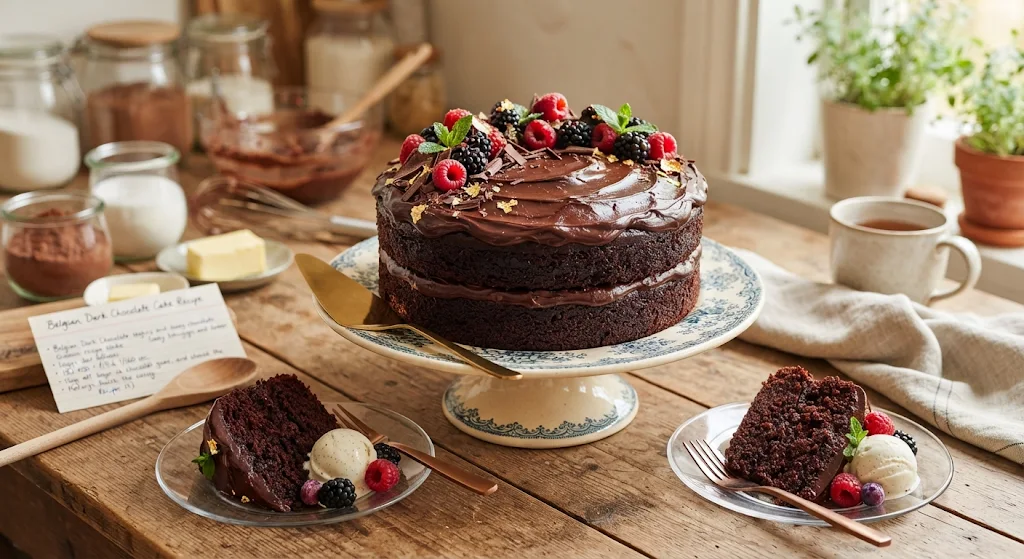
If you are still unsure what butter paper really is, our guide on whether butter paper is the same as parchment paper clears it up. Lining a tin correctly also helps bakes like our Belgian dark chocolate cake. For baking basics, King Arthur Baking is a trusted source.
Remember the heat rule and the butter paper vs wax paper choice becomes simple: bake with butter paper, wrap with wax. Find more kitchen tips on the JustHub blog.