A serrated knife powers through bread and tomatoes, but even those toothy blades go dull. Learning how to sharpen a serrated knife saves you buying a new one. The method differs from sharpening a straight edge, so technique matters. This guide shows how to sharpen a serrated knife at home, step by step.
Why serrated knives are different
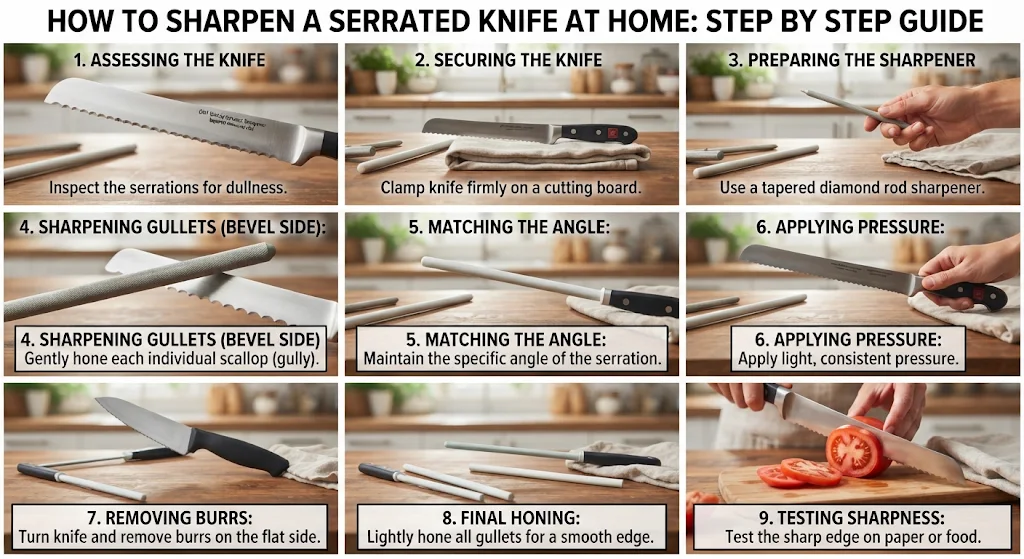
A serrated blade has a row of pointed teeth and scalloped grooves called gullets. Only the bevelled side of each gullet is sharpened, not the flat back. A standard whetstone cannot reach into those curves. Instead, you need a tapered sharpening rod.
How to sharpen a serrated knife with a rod
Choose a ceramic or diamond-coated tapered rod that fits inside the gullets. Match the rod to the bevel angle of each groove, usually following its existing shape. Draw the rod through each gullet a few times, moving from the narrow tip towards the handle. Keep pressure light and consistent so you do not grind away too much metal.
Finishing the edge
Sharpening raises a small burr on the flat side of the blade. Lay that side flat on a fine stone or steel and make a few light passes to remove it. Wipe the blade clean and test it on a slice of bread. Repeat on any gullet that still feels dull.
Serrated knife care checklist
- Use a tapered rod, not a flat whetstone.
- Sharpen only the bevelled side of each gullet.
- Deburr the flat back with a few light passes.
- Hand wash and dry to protect the edge.
Looking after kitchen tools
A sharp, clean knife is safer and more effective. Keep your blades spotless with our guides on how to clean steel utensils and how to clean stainless steel. For knife skills and sharpening advice, Serious Eats is a trusted source.
With a tapered rod and a little patience, you can bring a tired serrated knife back to a clean, confident bite. Find more kitchen tips on the JustHub blog.