Both are traditional oils with deep culinary roots, yet they could hardly be more different. The sesame oil vs mustard oil question matters most in Asian and South Asian cooking, where each has its place. Flavour and heat tolerance set them apart. This guide compares sesame oil vs mustard oil to help you choose.
Flavour and aroma
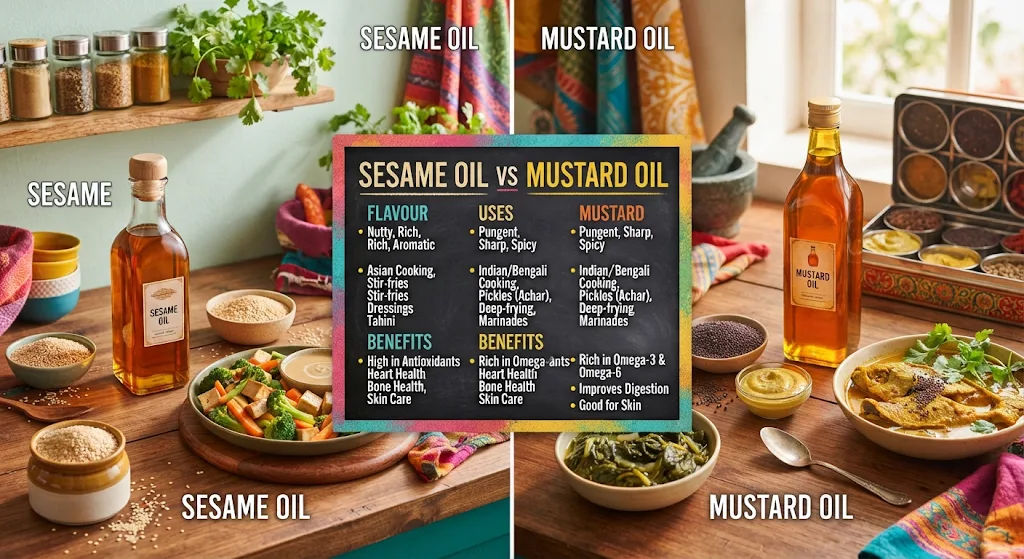
Sesame oil, especially the toasted kind, is warm, nutty and best added at the end of cooking. Mustard oil is sharp and pungent, with a peppery kick that mellows once heated. Many cooks gently warm mustard oil first to soften its bite. The two bring very different personalities to a dish.
Cooking uses in the kitchen
Mustard oil is a frying workhorse in Bengali, North Indian and Punjabi cooking. Its high smoke point suits deep-frying, tempering and pickling. Sesame oil, by contrast, often finishes stir-fries, noodles and dressings rather than frying them. Choosing well means matching the oil to the step.
Nutrition and considerations
Both oils are rich in unsaturated fats, and each offers its own balance of nutrients. Mustard oil contains erucic acid, so some regions limit its culinary sale, and moderation is wise. Sesame oil provides antioxidants and a lighter flavour for everyday use. As with all oils, small amounts go a long way.
Which oil to choose
- Use mustard oil for frying, tempering and pickles.
- Use sesame oil to finish stir-fries and dressings.
- Warm mustard oil to mellow its sharpness.
- Keep servings modest for either oil.
Compare and explore further
For a different matchup, see sesame oil vs coconut oil, and learn where sesame’s goodness begins in our guide to different types of seeds to eat. For dietary-fat guidance, Healthline is a reliable source.
Mustard oil rules the frying pan while sesame oil finishes with flair, so many kitchens happily keep both. Find more cooking tips on the JustHub blog.