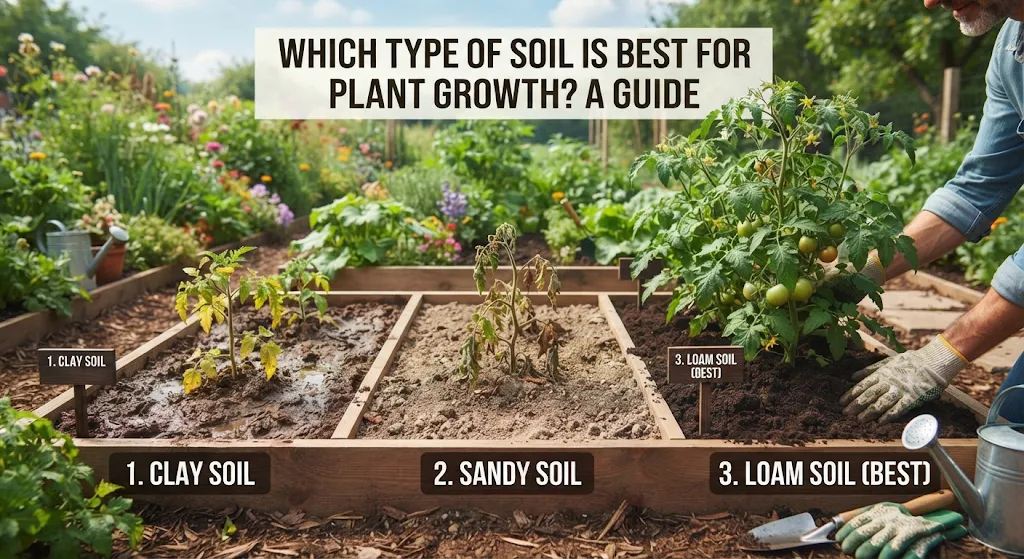
Healthy plants start from the ground up, quite literally. Many gardeners ask which type of soil is best for plant growth, hoping for one clear answer. For most plants, that answer is loam, but the full picture is worth knowing. This guide explains which type of soil is best for plant growth and how to improve what you have.
The main soil types
Garden soils fall into a few broad groups. Sandy soil drains fast but struggles to hold nutrients, while clay soil holds water yet can become heavy and waterlogged. Silty soil is fertile but compacts easily, and chalky soil tends to be alkaline. Each type suits some plants better than others.
Why loam is usually best
Loam blends sand, silt and clay in a happy balance. It drains well yet still holds enough moisture and nutrients for roots. Air can move through it, which healthy roots need. That balance is why loam is the gold standard for most plants.
Knowing your soil and its pH
A simple squeeze test tells you a lot. Sandy soil crumbles, clay forms a sticky ball, and loam holds together loosely. Soil pH matters too, since most plants prefer a slightly acidic to neutral range. Cheap test kits make checking easy.
How to improve your soil
- Dig in compost or well-rotted manure every year.
- Add organic matter to loosen clay and feed sandy soil.
- Mulch to protect structure and hold moisture.
- Avoid working soil when it is very wet.
Putting good soil to work
Great soil sets up everything you grow. See our guide on the best fruit plants for home garden to put it to use, or try container growing with how to plant sweet potatoes in a container. For soil science and testing, the Royal Horticultural Society is a trusted source.
Loam leads for most plants, but with compost and care almost any soil can grow a thriving garden. Find more gardening tips on the JustHub blog.