
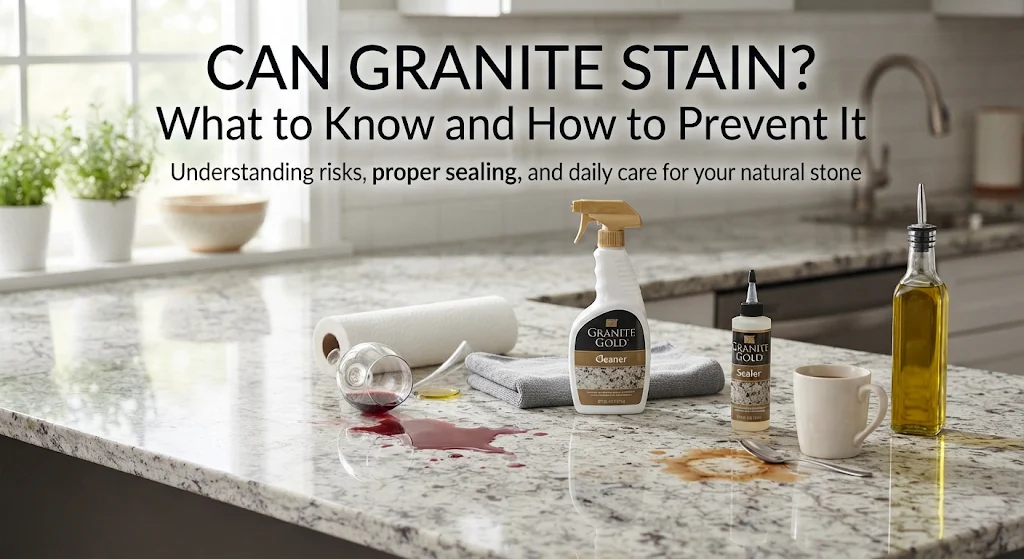
Granite looks tough, and it mostly is, but many owners still ask: can granite stain? The honest answer is yes, because granite is a natural stone with tiny pores that can absorb liquids. The good news is that staining is easy to prevent once you understand how. Here is what causes a granite stain and how to protect your worktop.
Can granite stain, and why?
Granite is porous, so unsealed or poorly sealed stone can soak up oil, wine and other liquids. These sink below the surface and leave a dark mark rather than sitting on top. Sealed granite resists this well, which is why regular sealing matters so much.
Common causes of a granite stain
Oil is the biggest culprit, from cooking fats to greasy food left on the surface. Dark liquids such as coffee, wine and fruit juice can also seep in. Acidic spills like lemon or vinegar may dull the finish, known as etching, which differs from a true stain. Standing water can even leave a cloudy patch over time.
How to remove stains from granite
Act fast and blot spills rather than wiping them across the stone. For a set-in oil mark, make a poultice of baking soda and water, spread it over the spot and cover it with cling film overnight. Lift the dried paste gently, then rinse. Repeat if the mark has faded but not vanished.
Preventing stains for good
- Seal granite once or twice a year.
- Wipe spills straight away, especially oil and wine.
- Use chopping boards and coasters.
- Clean with mild soap, not acidic cleaners.
Caring for stone surfaces
Good habits keep granite looking new for decades. The same careful approach applies to other hard surfaces, as in our guides on how to remove scratches from glass and cleaning timber floors with metho. For stone-specific care, the Natural Stone Institute offers trusted guidance.
So can granite stain? Yes, but with sealing and quick clean-ups, your worktop stays beautiful and mark-free. Find more home care tips on the JustHub blog.