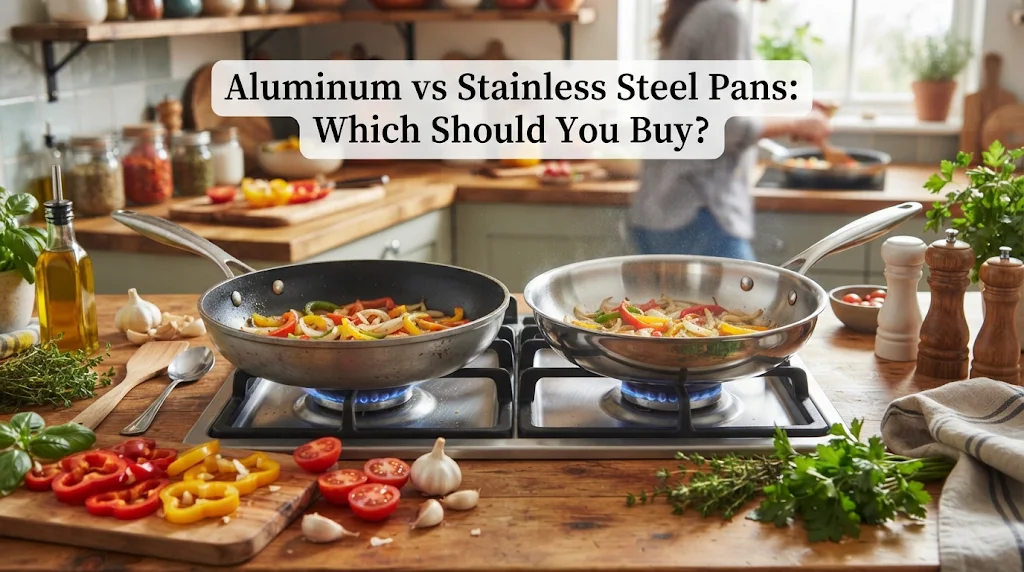
Choosing new cookware often comes down to one question: aluminum vs stainless steel pans, which is better? Both are kitchen staples, yet they behave very differently on the hob. The right choice depends on how you cook. This guide compares aluminum vs stainless steel pans so you can buy with confidence.
Heat performance
Aluminum wins on heat conduction, warming quickly and evenly. That makes it great for delicate tasks like sauces and eggs. Stainless steel conducts heat less well on its own, so quality pans add an aluminum or copper core. For that reason, many premium stainless pans blend both metals.
Durability and reactivity
Stainless steel is the tougher, longer-lasting option. It resists dents, scratches and corrosion, and it will not react with acidic foods. Bare aluminum, by contrast, can react with tomatoes or citrus and may warp over time. Anodised aluminum reduces these issues but costs more.
Weight, price and upkeep
Aluminum pans are light and usually cheaper, which suits everyday cooking and tight budgets. Stainless steel is heavier, pricier and built to last for decades. Stainless is also dishwasher-friendly and easy to keep looking new. Both reward good cleaning habits.
Which pan to choose
- Pick aluminum for fast, even heat and low cost.
- Pick stainless steel for durability and acidic foods.
- Consider clad pans that combine both metals.
- Match the pan to the cooking you do most.
Caring for your cookware
Whichever you choose, good cleaning keeps pans performing. See our guides on how to clean stainless steel and how to clean steel utensils for burnt-on marks and shine. For cookware testing and advice, Serious Eats is a trusted source.
There is no single winner in aluminum vs stainless steel pans; the best choice simply matches your cooking style and budget. Find more kitchen tips on the JustHub blog.